![[Search]](/static/images/search.gif)
![[A-Z Index]](/static/images/az.gif)
![[Contact]](/static/images/contact.gif)
![[University of Cambridge]](/static/images/identifier2.gif)
![[Talks.cam]](/static/images/talkslogosmall.gif)

 Professor Kazuto Akagi, Advanced Institute for Materials Research, Tohoku University
 Tuesday 06 March 2018, 11:00-12:00

Computational Homology and Materials Science
- 👤 Speaker: Professor Kazuto Akagi, Advanced Institute for Materials Research, Tohoku University
- 📅 Date & Time: Tuesday 06 March 2018, 11:00 - 12:00
- 📍 Venue: Goldsmiths 1, Lecture Theatre, Department of Materials Science & Metallurgy
Abstract
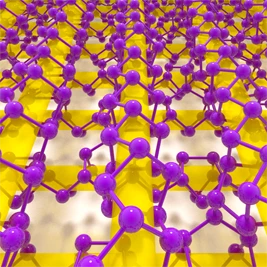
Finding relationship between structure and property is one of the essential subjects in materials science. However, it is still difficult to notice what is the structural motifs or hierarchical information characterizing complex systems. Computational homology based on “persistent homology” [1] is a powerful framework to detect and describe the “shape” in discrete data such as atomic configurations or pixel images. The obtained geometrical information is contracted as a two-dimensional map called “persistence diagram (PD)”, in which birth and death of N-dimensional holes are recorded.
From the view point of materials science, the advantage of this mathematical method is summarized as follows: (1) Detecting hidden order in the system. (2) Providing “finger prints (or descriptors)” of complex systems. (3) Enabling us to treat “inverse problems”.
In this talk, I will introduce the key points of computational homology for materials scientists. After that, we will see how it works in the analysis of molecular dynamics simulations and experimentally observed images, respectively.
[1] Y. Hiraoka et al., PNAS 113 , 7035-7040 (2016).
Series This talk is part of the Materials Modelling Seminars series.
Included in Lists
- Goldsmiths 1, Lecture Theatre, Department of Materials Science & Metallurgy
- Materials Modelling Seminars
Note: Ex-directory lists are not shown.