![[Search]](/static/images/search.gif)
![[A-Z Index]](/static/images/az.gif)
![[Contact]](/static/images/contact.gif)
![[University of Cambridge]](/static/images/identifier2.gif)
![[Talks.cam]](/static/images/talkslogosmall.gif)

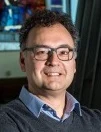
 Prof George Malliaras, Department of Engineering, University of Cambridge
 Wednesday 16 January 2019, 16:00-17:00

New materials and devices for interfacing with the nervous system
- 👤 Speaker: Prof George Malliaras, Department of Engineering, University of Cambridge 🔗 Website
- 📅 Date & Time: Wednesday 16 January 2019, 16:00 - 17:00
- 📍 Venue: Lecture Theatre 2, Department of Veterinary Medicine
Abstract
One of the most important scientific and technological frontiers of our time is the interfacing of electronics with living systems. This endeavour promises to deliver new tools for diagnosis and treatment of disease. Current solutions, however, are limited by the materials that are brought in contact with the tissue and transduce signals across the biotic/abiotic interface. Recent advances in electronics have made available materials with a unique combination of attractive properties, including mechanical flexibility, mixed ionic/electronic conduction, enhanced biocompatibility, and capacity for drug delivery. I will present examples of novel devices for recording and stimulation of neurons and demonstrate new technologies that offer tremendous opportunities to study the nervous system and treat its pathologies. · J. Rogers, G. Malliaras, and T. Someya, “Biomedical devices go wild”, Sci. Adv. 4, eaav1889 (2018).
· J. Rivnay, H. Wang, L. Fenno, K. Deisseroth, and G.G. Malliaras, “Next-generation probes, particles, and proteins for neural interfacing”, Sci. Adv. 3, e1601649 (2017).
· T. Someya, Z. Bao, and G.G. Malliaras, “The rise of plastic bioelectronics”, Nature 540, 379 (2016).
Series This talk is part of the Departmental Seminar Programme, Department of Veterinary Medicine series.
Included in Lists
- All Talks (aka the CURE list)
- Cambridge Immunology
- Cambridge Infectious Disease
- Cambridge Infectious Diseases
- Departmental Seminar Programme, Department of Veterinary Medicine
- Lecture Theatre 2, Department of Veterinary Medicine
- Vet School Seminars
Note: Ex-directory lists are not shown.