![[Search]](/static/images/search.gif)
![[A-Z Index]](/static/images/az.gif)
![[Contact]](/static/images/contact.gif)
![[University of Cambridge]](/static/images/identifier2.gif)
![[Talks.cam]](/static/images/talkslogosmall.gif)


 Tuesday 05 August 2008, 14:30-15:15

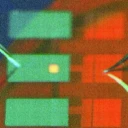
Scanning Probe Microscopy of Active Polymer Electronic Devices
- 👤 Speaker: David Ginger, University of Washington, Seattle
- 📅 Date & Time: Tuesday 05 August 2008, 14:30 - 15:15
- 📍 Venue: IRC Superconductivity Seminar Room, Cavendish Laboratory, Department of Physics
Abstract
The morphology of nanostructured blends has a dramatic influence on the performance of polymer solar cells and other devices. We use scanning probe microscopy techniques such as time-resolved electrostatic force microscopy, conductive and photoconductive AFM , and scanning Kelvin Probe microscopy to map local charge generation, recombination, transport, and injection in active polymer thin film devices ranging from polymer solar cells to polymer light-emitting electrochemical cells (LECs). We correlate these local properties with the bulk device performance to show that there is still room to improve some fullerene blend solar cells using better processing and improved anode materials, that most photocurrent is generated away from the visible domain interfaces in classic polyfluorene blends, and that the Heeger p-i-n diode model does not accurately describe the operation of the most commonly studied planar LEC structures.
Series This talk is part of the Optoelectronics Group series.
Included in Lists
- All Cavendish Laboratory Seminars
- All Talks (aka the CURE list)
- CamBridgeSens
- Cambridge talks
- Centre for Health Leadership and Enterprise
- Featured lists
- few29
- IRC Superconductivity Seminar Room, Cavendish Laboratory, Department of Physics
- ME Seminar
- Neurons, Fake News, DNA and your iPhone: The Mathematics of Information
- Optoelectronics Group
- School of Physical Sciences
- Thin Film Magnetic Talks
- Trust & Technology Initiative - interesting events
- yk449
Note: Ex-directory lists are not shown.