![[Search]](/static/images/search.gif)
![[A-Z Index]](/static/images/az.gif)
![[Contact]](/static/images/contact.gif)
![[University of Cambridge]](/static/images/identifier2.gif)
![[Talks.cam]](/static/images/talkslogosmall.gif)

 Dr Laura Gregory (University of Leeds)
 Monday 04 November 2019, 18:00-19:00

Quantifying fault slip over multiple earthquake cycles: the past is the key to the present
- 👤 Speaker: Dr Laura Gregory (University of Leeds)
- 📅 Date & Time: Monday 04 November 2019, 18:00 - 19:00
- 📍 Venue: Harker 1, Department of Earth Sciences, Downing Street
Abstract
In an ideal world, earthquakes would occur at regular intervals such that information on the rate and typical size of events could be used to make accurate forecasts of the future likelihood of earthquakes. However when we investigate fault activity over timescales longer than an earthquake cycle, we often find that earthquake recurrence and fault slip rate is far more variable.
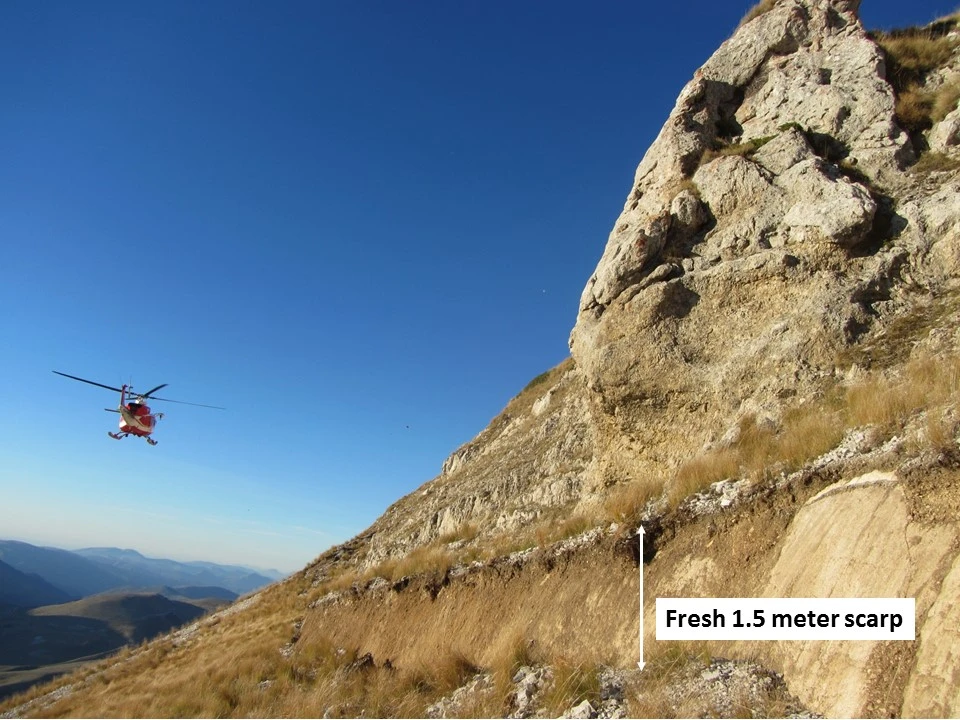
I will outline some of the basics of earthquake mechanics, and show why it is important to investigate the history of earthquakes in a region on timescales longer than humans have recorded them. I will demonstrate how research using cosmogenic isotopes to quantify fault activity during the past tens of thousands of years may be used to understand how faults work, particularly in the Abruzzo region of central Italy and across major extensional basins in western Turkey. These methods are not always straightforward, and we can discuss some of the limitations and considerations required to reliably quantify past fault activity. This will be very relevant to your undergraduate courses in Active Tectonics, and I’ll include plenty of field photos to keep everyone interested!
Series This talk is part of the Sedgwick Club talks series.
Included in Lists
- Department of Earth Sciences seminars
- Harker 1, Department of Earth Sciences, Downing Street
- Sedgwick Club talks
Note: Ex-directory lists are not shown.