![[Search]](/static/images/search.gif)
![[A-Z Index]](/static/images/az.gif)
![[Contact]](/static/images/contact.gif)
![[University of Cambridge]](/static/images/identifier2.gif)
![[Talks.cam]](/static/images/talkslogosmall.gif)


 Tuesday 12 October 2021, 19:30-20:45

Simulating Cosmic Dawn
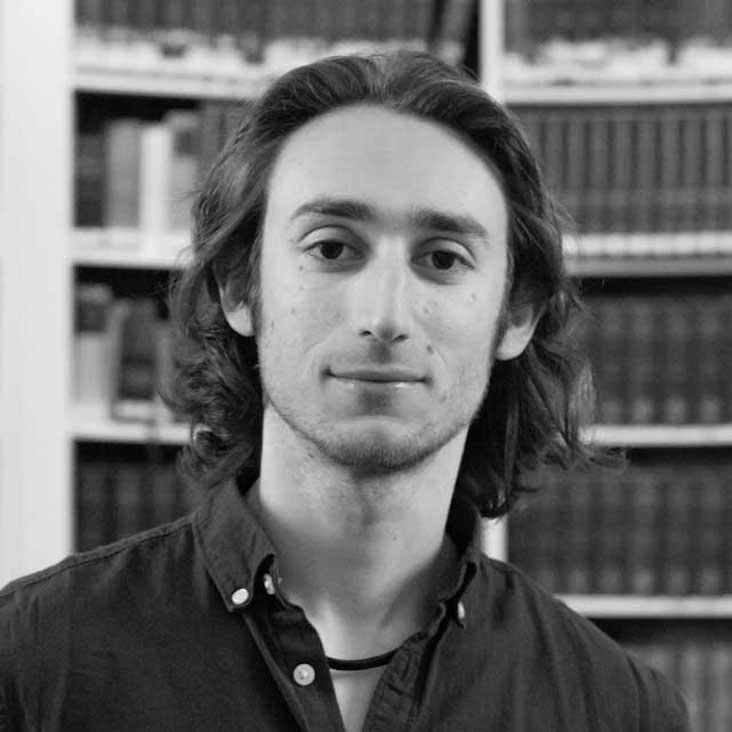
- 👤 Speaker: Dr. Harley Katz, University of Oxford 🔗 Website
- 📅 Date & Time: Tuesday 12 October 2021, 19:30 - 20:45
- 📍 Venue: Physiology Lecture Theatre, Department of Physiology, Development and Neuroscience, Physiology Building, Downing Site
Abstract
Just after the Big Bang, the Universe was primarily a hot ball of hydrogen and helium, with only a trace amount of heavy elements. Yet, 14 billion years later, a diversity of astrophysical objects such as stars, galaxies, and black holes light up our night sky. Understanding how the first generations of these objects formed and their subsequent impact on the future evolution of the Universe remains one of the most exciting frontiers in modern astrophysics. I will discuss how state-of-the-art computer simulations are leading the way in our understanding of cosmic dawn and the evolution of the Universe in the first billion years, known as the epoch of reionization.
Series This talk is part of the Cambridge University Astronomical Society (CUAS) series.
Included in Lists
- Cambridge University Astronomical Society (CUAS)
- Cambridge University Astronomical Society (CUAS)
- Chris Davis' list
- Cosmology, Astrophysics and General Relativity
- Guy Emerson's list
- Physiology Lecture Theatre, Department of Physiology, Development and Neuroscience, Physiology Building, Downing Site
Note: Ex-directory lists are not shown.