![[Search]](/static/images/search.gif)
![[A-Z Index]](/static/images/az.gif)
![[Contact]](/static/images/contact.gif)
![[University of Cambridge]](/static/images/identifier2.gif)
![[Talks.cam]](/static/images/talkslogosmall.gif)

 Demian Levis, Barcelone University
 Tuesday 22 February 2022, 13:00-14:00

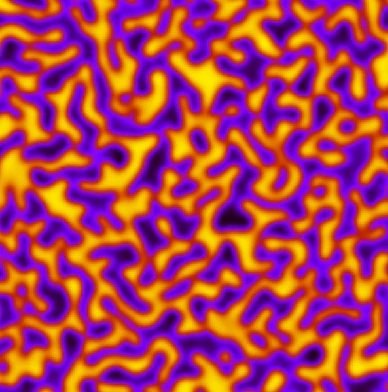
Simple models of active particles: Pattern formation and phase transitions
- 👤 Speaker: Demian Levis, Barcelone University
- 📅 Date & Time: Tuesday 22 February 2022, 13:00 - 14:00
- 📍 Venue: Center for Mathematical Sciences, Lecture room MR11, or https://maths-cam-ac-uk.zoom.us/j/98016675669
Abstract
Active matter comprises a wide variety of systems characterized by the continuous consumption of energy of its elementary constituents, typically converted into directed motion. As a result, active matter evolves out-of-equilibrium, lifting most of the constraints imposed by equilibrium statistical mechanics. One of the common features of these systems, is their (sometimes spectacular) collective self-organization in space and time, eventually leading to non-equilibrium phase transitions. This naturally arises the question: can we classify the large scale behavior of active systems within a limited number of ‘universality classes’, represented by some minimal models? Here I will present an overview of the collective behavior of simple models of chiral and non-chiral active particles with excluded volume interactions, in the presence (or absence) of velocity-aligning torques of different nature. I will discuss what I believe are some general features of these systems by comparing results obtained from particle-based simulations, continuum theories and recent experiments of spinning colloidal suspensions.
Series This talk is part of the DAMTP Statistical Physics and Soft Matter Seminar series.
Included in Lists
- All CMS events
- bld31
- Center for Mathematical Sciences, Lecture room MR11, or https://maths-cam-ac-uk.zoom.us/j/98016675669
- DAMTP Statistical Physics and Soft Matter Seminar
- Soft Matter
Note: Ex-directory lists are not shown.