![[Search]](/static/images/search.gif)
![[A-Z Index]](/static/images/az.gif)
![[Contact]](/static/images/contact.gif)
![[University of Cambridge]](/static/images/identifier2.gif)
![[Talks.cam]](/static/images/talkslogosmall.gif)

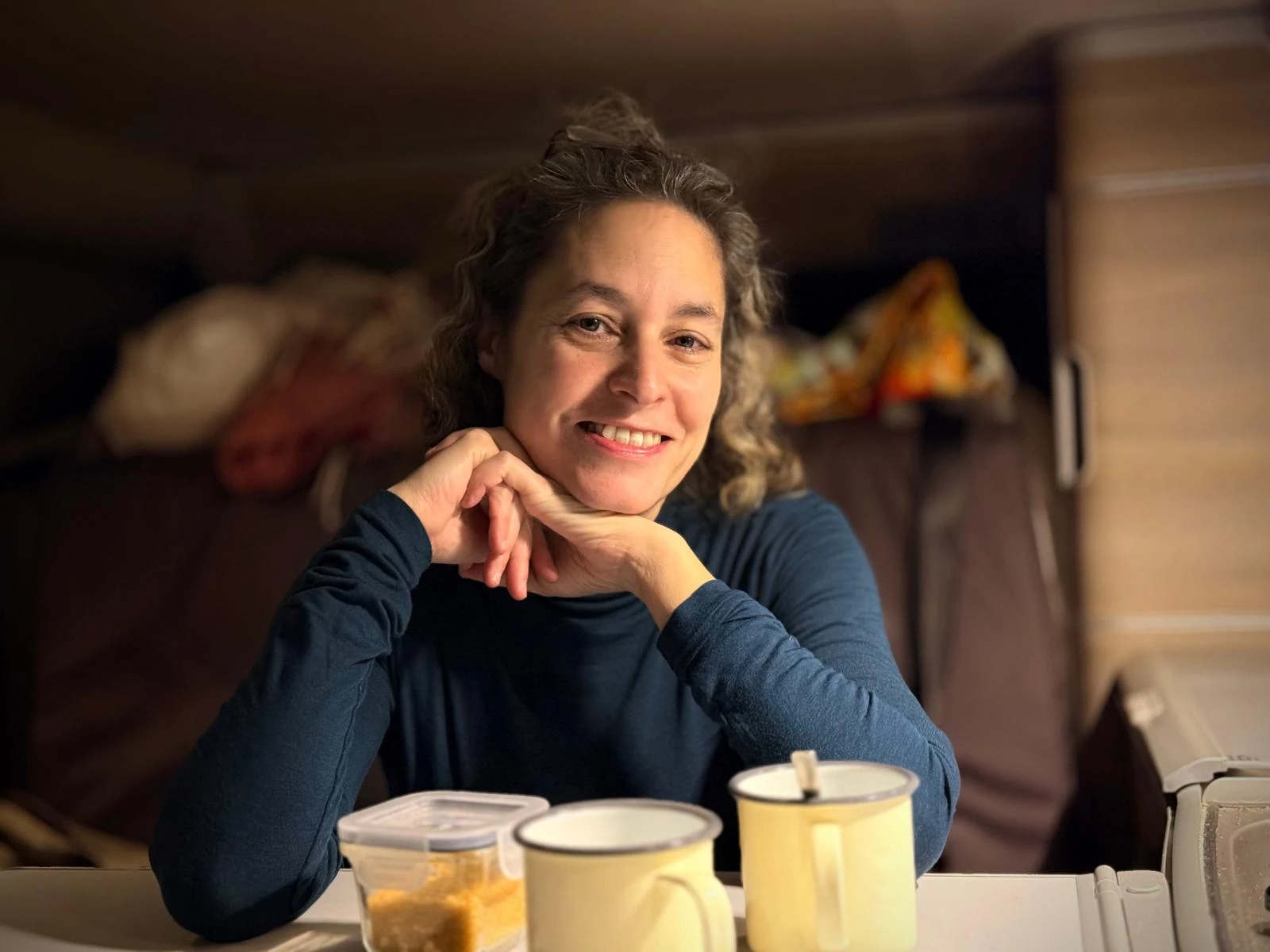
 Professor Inbal Arnon, Hebrew University of Jerusalem
  Tuesday 04 February 2025, 16:00-17:00

Starting Big: the importance of whole-to-part learning in language acquisition
- 👤 Speaker: Professor Inbal Arnon, Hebrew University of Jerusalem
- 📅 Date & Time: Tuesday 04 February 2025, 16:00 - 17:00
- 📍 Venue: Hybrid: in-person in Cambridge & online via Teams
Abstract
Abstract:
Why are children better language learners than adults despite being worse at a range of other cognitive tasks? Understanding this can shed new light on the process of first language acquisition and how it differs from that of second language learning, while also providing us with additional tools for teaching second languages effectively.
Many accounts focus on the cognitive or neurological differences between children and adults, which are in many ways irreversible. In my work, I focus instead on the way prior knowledge impacts the linguistic building blocks that children and adults use during learning, and how those early building blocks impact learning outcomes.
I propose and test the Starting Big Hypothesis: the idea that children’s advantage is related to their greater engagement with whole-to-part learning. Specifically, I propose that children rely on both single words and multiword units during learning, while adults do so less (because of their prior knowledge of words), and that this difference can explain (some of) adults’ difficulty in learning the grammatical relations between words. I draw on developmental, psycholinguistic and computational findings to show that multiword units are integral building blocks in language; that such units are facilitative for learning certain grammatical relations; and that adult learners rely on them less than children, a pattern that can explain differences between L1 and L2 learning.
I will end by discussing implications for models of L1 and L2 learning and the possible role of whole-to-part learning in the emergence of linguistic structure.
Speaker bio:
Prof. Arnon has a PhD in Linguistics and Cognitive Science (2011, Stanford University), and is currently a Full Professor of Psychology at the Hebrew University. Her research program, which lies on the interaction of Linguistics, Psychology, and Cognitive Science, focuses on understanding human’s unique ability to learn, use, and develop language, and more specifically, on understanding how children acquire language, how they differ from adults in doing so, and how learnability pressures shape the emergence and structure of human language.
Prof. Arnon has worked extensively on first language acquisition, developing a novel framework for understanding why children are better language learners than adults, with applied implications for human and machine learning (The Starting Big Approach, see Arnon, 2021 for a review). In her current projects, she asks whether learning pressures and constraints can explain why languages look the way they do, how language evolved, and how insights from child learning can be used to study non-human communication.
Series This talk is part of the Centre for Child, Adolescent & Family Research Seminar Series series.
Included in Lists
- Centre for Child, Adolescent & Family Research Seminar Series
- Hybrid: in-person in Cambridge & online via Teams
- Hybrid: in-person in Cambridge & online via Teams
- Psychology talks and events
- Yishu's list
Note: Ex-directory lists are not shown.