![[Search]](/static/images/search.gif)
![[A-Z Index]](/static/images/az.gif)
![[Contact]](/static/images/contact.gif)
![[University of Cambridge]](/static/images/identifier2.gif)
![[Talks.cam]](/static/images/talkslogosmall.gif)

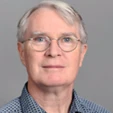
 Prof. Michael Treacy, Department of Physics, Arizona State University
 Thursday 05 December 2024, 15:30-17:00

Department of Materials Science & Metallurgy Goldsmiths' Seminars: From Graphs to Regular Structures
- 👤 Speaker: Prof. Michael Treacy, Department of Physics, Arizona State University
- 📅 Date & Time: Thursday 05 December 2024, 15:30 - 17:00
- 📍 Venue: Goldsmiths' 2 & https://zoom.us/j/96836714124
Abstract
Refreshments and cakes will be available!
The connectivity of covalently bonded compounds can be described fully by a list of atoms (vertices) and their bonded neighbours (edges). Such a list is a mathematical graph containing no information about 3D Cartesian space. Thus, a graph tells us nothing about the structure (topology) of the material. If the vertex elements are known, structural inferences can be made by embedding the graph in 3-dimensional space by computational methods using known bonding properties.
In this talk, I describe how such a graph-theoretic approach was used to enumerate a database of hypothetical crystalline zeolite frameworks. Because zeolites are tetrahedral silicate framework structures, their graphs are 4-coordinated – each vertex is connected to exactly four others. The number of possible graphs is finite for a fixed number of unique tetrahedral vertices, N, in a given space group symmetry. However, it grows combinatorially as N increases, limiting this approach to the simplest structures with low N. I will discuss some 3-periodic and 2-periodic examples from the zeolite database, which has about 10 million entries. In collaboration with Prof Mike O’Keeffe at ASU , ideas learned in the zeolite work have been extended to investigate hypothetical polycatenated molecular and crystalline materials. These include hypothetical knotted, linked, interlocked, interthreaded, and woven structures, bringing the research within the bounds of knot theory! These catenated structures can make beautiful models. The presence of mechanical bonds gives these materials unusual mechanical properties. This work focuses on the low-transitivity structures, with just one or two types of vertex and one type of edge, as these may be the easiest to synthesize in the laboratory. Lessons learned in the catenane work have shed light on some of the roadblocks encountered in the earlier zeolite enumeration work.
Series This talk is part of the Department of Materials Science & Metallurgy Goldsmiths' Seminars series.
Included in Lists
- Department of Materials Science & Metallurgy Goldsmiths' Seminars
- Goldsmiths' 2 & https://zoom.us/j/96836714124
Note: Ex-directory lists are not shown.