![[Search]](/static/images/search.gif)
![[A-Z Index]](/static/images/az.gif)
![[Contact]](/static/images/contact.gif)
![[University of Cambridge]](/static/images/identifier2.gif)
![[Talks.cam]](/static/images/talkslogosmall.gif)

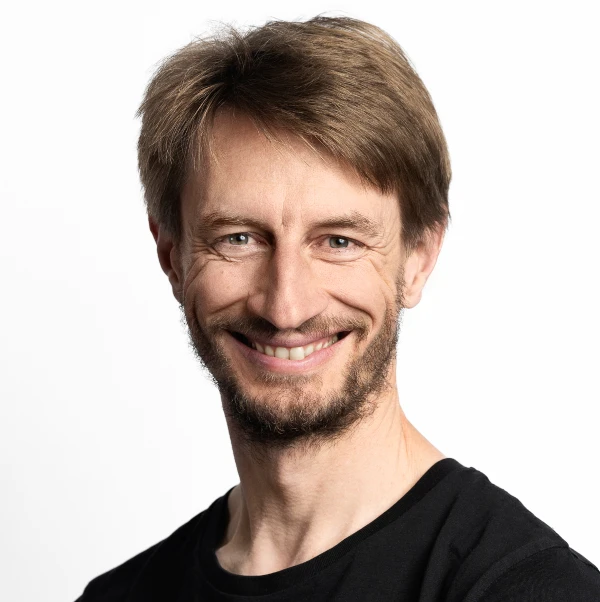
 Joachim Breitner, Lean FRO
 Friday 15 August 2025, 11:15-12:15

Recursive Definitions in Lean
- 👤 Speaker: Joachim Breitner, Lean FRO 🔗 Website
- 📅 Date & Time: Friday 15 August 2025, 11:15 - 12:15
- 📍 Venue: Computer Laboratory, LT1
Abstract
The logic underlying the Lean programming language and theorem prover does not know recursive functions, yet Lean users can define functions recursively. In this session we’ll get to look at how Lean translates the user’s specification into something that the logic understands, whether by structural recursion, well-founded recursion or the brand-new partial fixpoint strategy. We’ll also see how this affects compiled code (namely not at all), and the difference between partial and unsafe.
This session will likely contain high amounts of improvised live-coding and benefit greatly from your questions, suggestions and discussions.
Joachim Breitner @nomeata
Ever since Joachim has found beauty and elegance in Functional Programming, he’s been working with and on functional programming languages, in particular Haskell.
He’s also always been fascinated by Interactive Theorem Proving and his academic persona used Isabelle and Coq for formalize mathematics and verify programs.
These two interests find their natural synthesis in the Lean programming language, and Joachim joined the Lean FRO to work on the Lean compiler itself.
Besides such serious nerdery, you’ll find Joachim dancing Swing and Tango (in particular when traveling to conferences, so talk to him if you want to join), paragliding and unapologetically making bad puns.
Series This talk is part of the Computer Laboratory Computer Architecture Group Meeting series.
Included in Lists
- All Talks (aka the CURE list)
- bld31
- Cambridge talks
- Computer Laboratory Computer Architecture Group Meeting
- Computer Laboratory, LT1
- Department of Computer Science and Technology talks and seminars
- Interested Talks
- School of Technology
- Trust & Technology Initiative - interesting events
- yk449
Note: Ex-directory lists are not shown.