![[Search]](/static/images/search.gif)
![[A-Z Index]](/static/images/az.gif)
![[Contact]](/static/images/contact.gif)
![[University of Cambridge]](/static/images/identifier2.gif)
![[Talks.cam]](/static/images/talkslogosmall.gif)

 Rastko Sknepnek, University of Dundee
 Tuesday 25 November 2025, 13:00-14:00

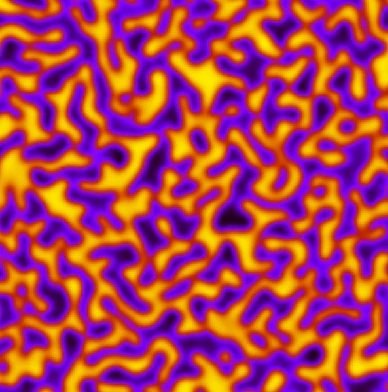
Cell-level modelling of active forces in early-stage development
- 👤 Speaker: Rastko Sknepnek, University of Dundee
- 📅 Date & Time: Tuesday 25 November 2025, 13:00 - 14:00
- 📍 Venue: Center for Mathematical Sciences, Lecture room MR4.
Abstract
Gastrulation, the early stage of embryonic development, is an essential, highly conserved process in the development of all vertebrate embryos, including humans. During gastrulation, the embryo transforms from a single layer of epithelial cells into a three-layered structure of three major embryonic cell types, the ectoderm, the mesoderm and endoderm, in a process involving large scale cell and tissue movements. When not executed properly, it causes abortion of development and, in milder cases, leads to a wide range of congenital defects. The cellular mechanisms controlling gastrulation, when activated in the wrong place or at the wrong time, result in severe disease in adult life, such as cancer and malfunctioning of the immune system. Gastrulation requires the integration of critical cell behaviours such as cell differentiation, division, and movement through chemical and mechanical cell-cell signalling, to achieve the morphogenesis essential for proper functions. These interactions between signalling and cell behaviours create complex feedback loops between tissue, cell, and molecular length- and timescales that have evolved to enable the robust formation of complex multi-cellular structures. In this talk, using the vertex model for cell-level description of epithelial tissues, we will discuss how various forms of active processes, such as mechano-chemical feedback, cell growth, division, ingression, etc. couple to cell mechanics and lead to pattern formation and flows in model tissues. We will also make qualitative comparisons to the primitive steak formation (i.e. the gastrulation) in chick embryos.
Series This talk is part of the DAMTP Statistical Physics and Soft Matter Seminar series.
Included in Lists
- All CMS events
- bld31
- Center for Mathematical Sciences, Lecture room MR4.
- DAMTP Statistical Physics and Soft Matter Seminar
- Soft Matter
Note: Ex-directory lists are not shown.