![[Search]](/static/images/search.gif)
![[A-Z Index]](/static/images/az.gif)
![[Contact]](/static/images/contact.gif)
![[University of Cambridge]](/static/images/identifier2.gif)
![[Talks.cam]](/static/images/talkslogosmall.gif)

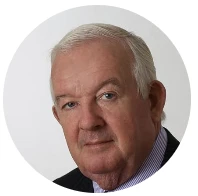
 Chris O’Malley
 Monday 16 February 2026, 17:00-18:30

Bonds without borders: the Eurobond market
- 👤 Speaker: Chris O’Malley
- 📅 Date & Time: Monday 16 February 2026, 17:00 - 18:30
- 📍 Venue: John Bradfield Room, Darwin College and Zoom
Abstract
In the United States the second Trump administration has continued to pursue its ‘America First’ philosophy and its target of significantly reducing the US trade deficit. The subsequent imposition of a host of protectionist tariff policies have shaken the foundations of global trade and rattled the financial markets. What might be the long-term effects of such policies? Back in the early 1960s the principal concern of the Kennedy administration was the ever-growing US Balance of Payments deficit and the continuing flow of dollars outside the United States. Such was the flow of dollars into Europe that the significant balances accumulating became referred to as ‘Eurodollars’. As a protectionist measure in 1963 JFK imposed the ‘Interest Equalization Tax’ (IET) to curb the U.S. balance-of-payments deficit. The tax made it less profitable for U.S. investors to invest abroad, thereby keeping capital within the domestic economy. This modest protectionist measure had significant consequences for the global financial markets. As the US securities market was now closed to foreign investors an alternative market had to be found if the major financing needs of international borrowers were to be met. What about the vast pool of Eurodollars?
In time, through the endeavours of an extraordinary group of international financiers overcoming myriad regulatory and tax barriers, these offshore dollars provided the means to raise international finance on a cross-border basis. This so-called ‘Eurobond’ market tapped international investors regardless of their domicile, market or currency and laid the foundations of today’s global cross-border markets. Sadly, the last quarter of 2025 saw the passing of some significant pioneering figures in the development of the world’s largest international capital market. Hans Jeorg Rudloff masterminded the transition of the Eurobond market from a largely retail investor market, to a market financing supranationals, sovereigns and major corporations satisfying the appetites of the world’s major institutional investors. Eugene Rotberg, formerly Treasurer of The World Bank, would undertake the first currency and interest rate swap transaction, heralding an era of astonishing flexibility for both borrowers and investors to meet their international financing and investment needs. The derivative markets were born and would grow exponentially. In time the markets would become a victim of their own success and excesses. In more modern times regulators would have to rein in those excesses, but always with a view that the underlying cross border bond market must be preserved as the cornerstone of international financing.
Series This talk is part of the Financial History Seminar series.
Included in Lists
- AUB_Cambridge Seminars
- Centre for Health Leadership and Enterprise
- CERF and CF Events
- Chris Davis' list
- Darwin Lectures and Seminars
- Economic and Social History Seminars
- Economics and Philosophy
- Financial History Seminar
- history
- John Bradfield Room, Darwin College and Zoom
- Neurons, Fake News, DNA and your iPhone: The Mathematics of Information
- xl669's list
Note: Ex-directory lists are not shown.