![[Search]](/static/images/search.gif)
![[A-Z Index]](/static/images/az.gif)
![[Contact]](/static/images/contact.gif)
![[University of Cambridge]](/static/images/identifier2.gif)
![[Talks.cam]](/static/images/talkslogosmall.gif)

 George Booth (King's College London)
 Wednesday 11 March 2026, 16:15-17:15

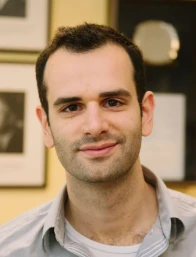
How should we use (classical) computers to simulate (realistic) electrons?
- 👤 Speaker: George Booth (King's College London)
- 📅 Date & Time: Wednesday 11 March 2026, 16:15 - 17:15
- 📍 Venue: Ray Dolby Auditorium, Ray Dolby Centre, Cavendish Laboratory, JJ Thomson Avenue, CB3 0US
Abstract
Many interacting electrons give rise to the fantastic diversity of properties of materials and chemical systems in the world around us. However, predicting the properties of these systems without resorting to empiricism or experimental guidance is often held up as an example of an ‘exponential wall’ for numerical simulation, and the necessity of quantum computers. However, despite this formal scaling, in the last 100 years the field has made great strides into a truly first principles simulation of correlated quantum matter. We will take a walk through this conceptual landscape of ideas and approximations that have proven effective in breaking down this wall, and demonstrate some of the new numerical tools which are emerging to treat these systems. In particular, we will focus on new approaches to bridge the gap between the accurate simulation of phenomenological lattice models, and a systematically improvable description of electronic properties in realistic materials science.
Series This talk is part of the Cavendish Quantum Colloquium series.
Included in Lists
- All Cavendish Laboratory Seminars
- Cavendish Quantum Colloquium
- Centre for Health Leadership and Enterprise
- Featured lists
- few29
- ME Seminar
- Neurons, Fake News, DNA and your iPhone: The Mathematics of Information
- Ray Dolby Auditorium, Ray Dolby Centre, Cavendish Laboratory, JJ Thomson Avenue, CB3 0US
- School of Physical Sciences
- Thin Film Magnetic Talks
Note: Ex-directory lists are not shown.