![[Search]](/static/images/search.gif)
![[A-Z Index]](/static/images/az.gif)
![[Contact]](/static/images/contact.gif)
![[University of Cambridge]](/static/images/identifier2.gif)
![[Talks.cam]](/static/images/talkslogosmall.gif)


 Wednesday 18 March 2026, 13:45-14:15

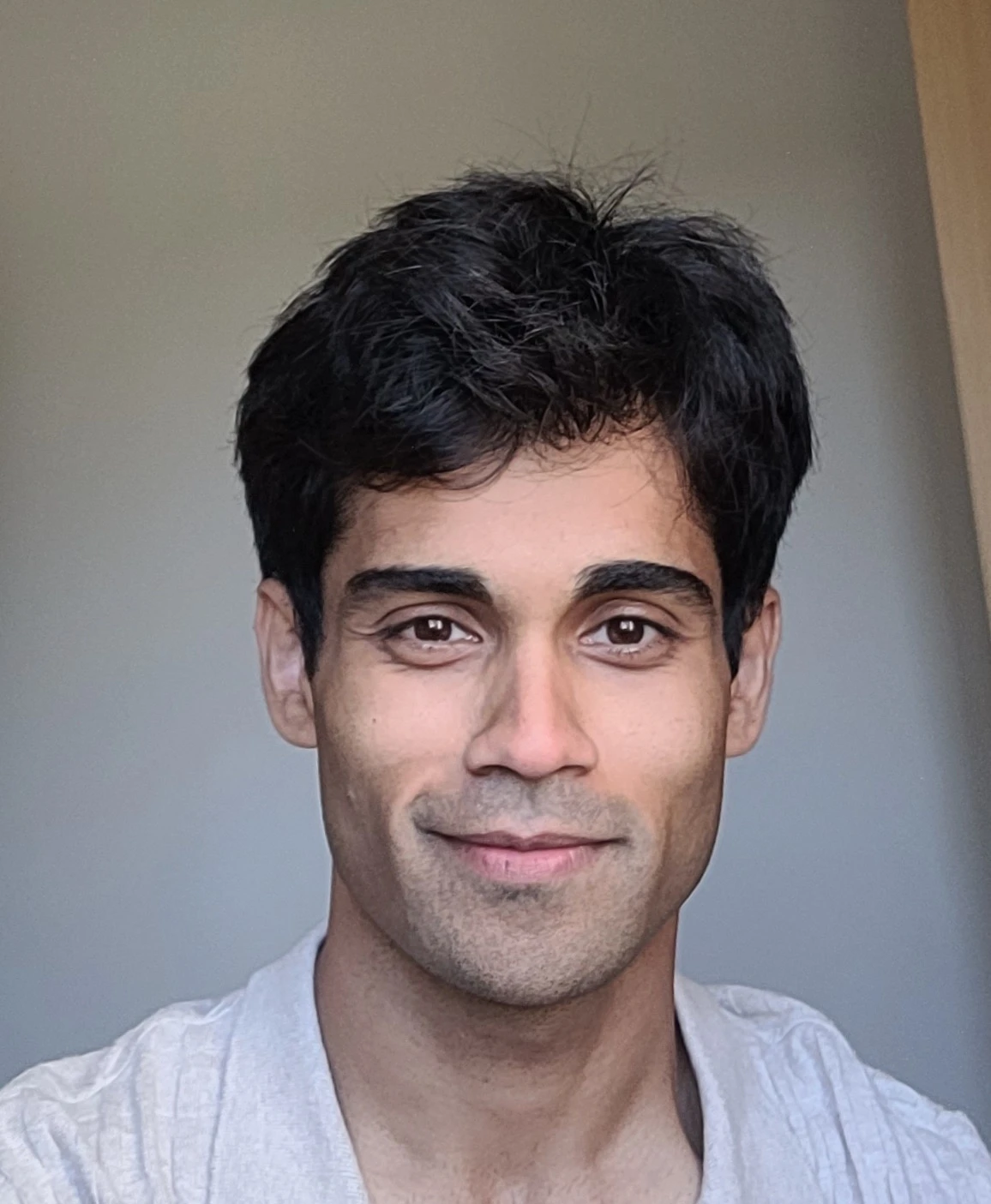
Physical properties and redshift distributions of KiDS-1000 galaxies using pop-cosmos
- 👤 Speaker: Dr Anik Halder (University of Cambridge)
- 📅 Date & Time: Wednesday 18 March 2026, 13:45 - 14:15
- 📍 Venue: Hoyle Lecture theatre + Zoom
Abstract
Accurate redshift calibration and physically motivated source sample selection are central challenges for precision weak lensing cosmology. In this talk, I will present our recent work on forward modelling redshift distributions and inferring physical properties of weak lensing galaxies in the Kilo-Degree Survey (KiDS-1000) using a generative model for the galaxy population. The framework enabling this work is pop-cosmos, a calibrated galaxy population model that allows principled Bayesian inference of individual galaxy redshifts and physical properties for millions of KiDS-1000 sources. Validation against spectroscopic samples demonstrates low bias and scatter in the inferred photometric redshifts, while physical property inference enables the construction of weak lensing catalogues that mitigate intrinsic alignment systematics. We also develop a forward-modelling framework to infer the redshift distributions of the KiDS-1000 galaxies. By applying a KiDS data and survey selection model to synthetic photometric data of mock pop-cosmos galaxies, we directly characterize the redshift distributions in each of the five tomographic bins of KiDS-1000, thereby bypassing the need for spectroscopic reweighting used in conventional redshift calibration methods. Overall, our results demonstrate how the pop-cosmos galaxy population model can deliver accurate redshift distributions as well as galaxy properties, crucial for connecting galaxy evolution physics and weak lensing cosmology with Rubin LSST and Euclid.
Series This talk is part of the Institute of Astronomy Seminars series.
Included in Lists
- Cambridge Astronomy Talks
- Combined External Astrophysics Talks DAMTP
- Cosmology, Astrophysics and General Relativity
- Cosmology lists
- Hoyle Lecture theatre + Zoom
- Institute of Astronomy Seminars
- Institute of Astronomy Talk Lists
- Kavli Institute for Cosmology Talk Lists
- Priscilla
Note: Ex-directory lists are not shown.