![[Search]](/static/images/search.gif)
![[A-Z Index]](/static/images/az.gif)
![[Contact]](/static/images/contact.gif)
![[University of Cambridge]](/static/images/identifier2.gif)
![[Talks.cam]](/static/images/talkslogosmall.gif)


 Tuesday 15 June 2010, 10:30-11:30

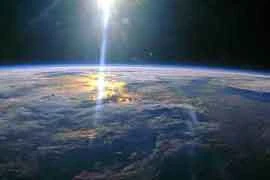
Variability of the winter stratosphere: the sudden stratospheric warming of 2009
- 👤 Speaker: Dr Yvonne Hinssen, Institute for Marine and Atmospheric Research, Utrecht University
- 📅 Date & Time: Tuesday 15 June 2010, 10:30 - 11:30
- 📍 Venue: Todd-Hamied Room, Department of Chemistry
Abstract
Using the ECMWF ERA -interim reanalysis data for 1989-2008, it is shown that a relation exists between the stratospheric polarcap potential vorticity (PV) and the 100 hPa eddy heat flux. A difference in PV between years is found to be linearly related to the flux difference integrated over time, taking into account a decrease in relaxation timescale with height in the atmosphere.
This mean PV-flux relation is then used to estimate the polarcap PV for the 2008/2009 winter from the climatological PV and the 100 hPa flux difference between 2008/2009 and the climatology. The ERA -interim polarcap PV for 2008/2009 shows a large and abrupt change in midwinter, related to the occurrence of the Sudden Stratospheric Warming (SSW) in January 2009, and this is also captured by the PV estimated from the 100 hPa flux and the PV-flux relation. The results show that the large interannual variability in the state of the stratosphere that is observed in the northern hemisphere is largely determined by the interannual variations in the 100 hPa heat flux.
Piecewise potential vorticity inversion is then used to examine the influence of the stratospheric PV on the zonal wind before and after the occurrence of the 2009 SSW . A change in this influence from westerly before the SSW to easterly afterwards is found, which results in changes in the stratospheric influence on the tropospheric winds up to 5 m s-1 within a few weeks. These changes are found to be a substantial contribution to the wind difference observed in the ERA -interim data, indicating that the stratosphere influences the tropospheric conditions, leading to a weakening of the westerlies due to the occurrence of the January 2009 SSW . The PV changes accompanying the SSW in the lower stratosphere persist for several months, indicating that stratospheric information might be valuable for extended range weather forecasts.
Series This talk is part of the Centre for Atmospheric Science seminars, Chemistry Dept. series.
Included in Lists
- All Talks (aka the CURE list)
- Cambridge Environment
- CamBridgeSens
- Cambridge talks
- Centre for Atmospheric Science seminars, Chemistry Dept.
- Climate Science Seminars within Cambridge
- Department of Chemistry
- Featured lists
- LCLU Departmental Talks
- Life Science Interface Seminars
- Queens' College Politics Society
- School of Physical Sciences
- Talks related to atmosphere and ocean dynamics and climate science
- Todd-Hamied Room, Department of Chemistry
- Trust & Technology Initiative - interesting events
- yk449
Note: Ex-directory lists are not shown.