![[Search]](/static/images/search.gif)
![[A-Z Index]](/static/images/az.gif)
![[Contact]](/static/images/contact.gif)
![[University of Cambridge]](/static/images/identifier2.gif)
![[Talks.cam]](/static/images/talkslogosmall.gif)


 Friday 18 January 2013, 17:30-18:30

Foresight in Ancient Civilisations
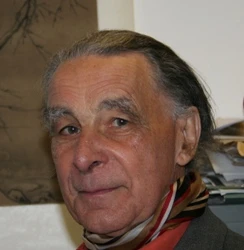
- 👤 Speaker: Professor Sir Geoffrey Lloyd, University of Cambridge
- 📅 Date & Time: Friday 18 January 2013, 17:30 - 18:30
- 📍 Venue: LMH, Lady Mitchell Hall
Abstract
Abstract
This lecture will review just some of the extensive evidence from ancient civilisations – mainly China, Mesopotamia and Greece – that helps to throw light on four interrelated questions that form my principal agenda: (1) What items were the subjects of prediction? (2) How were predictions made: on what basis did people think they could foresee the future? (3) Why were they interested in doing so? (4) How is foresight related first to divination and prediction in general, and then to wisdom and prudence? The subjects on which predictions were attempted (Q 1) can be used to reveal the concerns and values of the groups in question. While hundreds of different techniques were tried out (Q 2) that will lead me to examine the ways ancient theorists evaluated them and to a discussion of the growth of scepticism. The aims and motives of ancient investigators (Q 3) include influencing policy and advising rulers as well as building up their own prestige (when they got it right). Most important is Q 4 . What were the resources available in antiquity to learn to make more prudent and wiser judgements about what to do, and to that end do we not still need all the resources available to us to do the same?
Biography
Geoffrey Lloyd is Professor Emeritus of Ancient Philosophy and Science at Cambridge, where he was Master of Darwin College from 1989 to 2000. He is now based at the Needham Research Institute, whose Trust he chaired from 1992 to 2002. He has held Visiting Professorships in Europe (France, Spain, Italy, Germany) in the Far East (PRC, Taiwan, Korea, Japan, Singapore), Australasia, and North and South America. He has published 25 books, initially concentrating on ancient Greek philosophy and science and then embarking on detailed comparative studies with ancient Chinese thought. His three most recent books, which tackle the underlying philosophical problems of such comparisons and related issues in cognitive science, are: Cognitive Variations: Reflections on the Unity and Diversity of the Human Mind (2007: the subject of a special number of Interdisciplinary Science Reviews in 2010), Disciplines in the Making (2009) and Being, Humanity and Understanding (2012, all from Oxford University Press). He has been translated into12 different languages. He became a Fellow of the British Academy in 1983 and an Honorary Foreign Member of the American Academy of Arts and Sciences in 1995. He was awarded the Sarton medal for History of Science in 1987, and the Kenyon Medal for Classical Studies in 2007. He holds Honorary Fellowships at King’s, Darwin, and Tembusu College Singapore, and Honorary Doctorates from the Universities of Athens and Oxford. He was knighted for ‘services to the history of thought’ in 1997.
Series This talk is part of the Darwin College Lecture Series series.
Included in Lists
- All Talks (aka the CURE list)
- Annual Food Agenda
- AUB_Cambridge Seminars
- Cambridge Infectious Diseases
- Centre for Health Leadership and Enterprise
- Chris Davis' list
- custom
- Darwin College Lecture Series
- Darwin Lectures and Seminars
- DevBio
- Featured lists
- Featured talks
- Graduate-Seminars
- Guy Emerson's list
- Hanchen DaDaDash
- history
- History and Philosophy of Science long list
- Humanitas and General Science
- Inference Group Summary
- LMH, Lady Mitchell Hall
- Major Public Lectures in Cambridge
- Martin's interesting talks
- Neurons, Fake News, DNA and your iPhone: The Mathematics of Information
- personal list
- Talks related to sustainability and the environment
Note: Ex-directory lists are not shown.