![[Search]](/static/images/search.gif)
![[A-Z Index]](/static/images/az.gif)
![[Contact]](/static/images/contact.gif)
![[University of Cambridge]](/static/images/identifier2.gif)
![[Talks.cam]](/static/images/talkslogosmall.gif)

 Professor Michael Ferenczi, Lee Kong Chian School of Medicine, Singapore
 Monday 24 February 2014, 18:00-19:00

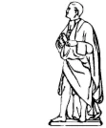
Hop, skip and jump - muscles are not just for running
- 👤 Speaker: Professor Michael Ferenczi, Lee Kong Chian School of Medicine, Singapore
- 📅 Date & Time: Monday 24 February 2014, 18:00 - 19:00
- 📍 Venue: Bristol-Myers-Squibb Lecture theatre, Department of Chemistry
Abstract
In the second half of the 19th century, Etienne-Jules Marey, a famous French physiologist devised and constructed clever instruments incorporating pressure gauges and motion sensors to investigate the dynamics of movement, such as the movement of blood in the circulation and the locomotion of Man, horses, birds and fish, even zoo animals such as elephants brought to his laboratory in the Bois de Boulogne in Paris. Although driven by scientific curiosity, his work attracted the attention of those intent on improving the physical and emotional state of French people through ‘culture physique’, gymnastics and sports. This was a time when the Olympic games were revived by Pierre de Coubertin, when military service became compulsory and improvements were needed to the training of soldiers to maximise their performance in war. Similarly industrialisation required the optimisation of workers’ movements on the factory floor. Clearly Marey’s studies on fatigue and performance became highly important to the French state. Marey reported that movements which lowered the centre of gravity were much less fatiguing than movements requiring an elevation of the centre of gravity. Hence, the study of hops, skips and jumps, comparing the take-off with the landing phases, using ground-braking photographic tricks to measure these rapid movements featured highly in his work.
The work of AV Hill a couple of decades later followed very much in the spirit of Marey’s studies, both from the point of view of the design of new instruments and for better understanding the mechanisms of locomotion, the chemistry powering movement and the limits of power and efficiency. A.V. Hill’s work inspired my own teachers, and I will be presenting how new instruments, techniques and approaches at the single cell level follow on from this tradition to explore the motions of the molecular motors in muscle, the proteins responsible for locomotion. I shall focus in particular on the peculiarities of extrinsic movement, also known as anti-gravity movements which Marey had described as those in which the centre of gravity is lowered. Marey had said that these movements are less fatiguing. I will describe the molecular motors and show how they indeed reduce their energy use during such stretching movements, and show that the same process can occur in the heart muscle.
Series This talk is part of the Cambridge Philosophical Society series.
Included in Lists
- All Talks (aka the CURE list)
- baz21 science lists
- Biomimetic manufacturing and sustainability
- Bristol-Myers-Squibb Lecture theatre, Department of Chemistry
- Cambridge Philosophical Society
- Centre for Health Leadership and Enterprise
- Chris Davis' list
- custom
- Featured lists
- Featured talks
- Guy Emerson's list
- ld636
- Major Public Lectures in Cambridge
- Martin's interesting talks
- mig40's list
- Neurons, Fake News, DNA and your iPhone: The Mathematics of Information
- personal list
- PMRFPS's
Note: Ex-directory lists are not shown.