![[Search]](/static/images/search.gif)
![[A-Z Index]](/static/images/az.gif)
![[Contact]](/static/images/contact.gif)
![[University of Cambridge]](/static/images/identifier2.gif)
![[Talks.cam]](/static/images/talkslogosmall.gif)

 Professor Sir Tony Hoare FRS FREng
 Wednesday 19 November 2014, 18:00-19:00

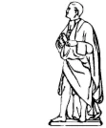
HONORARY FELLOWS PRIZE LECTURE - Could computers understand their own programs?
- 👤 Speaker: Professor Sir Tony Hoare FRS FREng
- 📅 Date & Time: Wednesday 19 November 2014, 18:00 - 19:00
- 📍 Venue: Bristol-Myers-Squibb Lecture theatre, Department of Chemistry
Abstract
Aristotle showed how humans can understand the processes of our own rational thinking. Euclid showed us how to understand simple programs for a wide range of useful geometric constructions. Turing showed us how to understand the more complex and more general programs of the present day. Finally, Turing suggested that we can test the understanding of computers in the same way that we used to test the understanding of our students: by an interactive examination.
From these historic insights, I will argue for a positive answer to the question of my title. Again following Turing, I will suggest that exploitation of this potential understanding is a Challenge for Computing Science that may take fifty years of international collaborative effort to achieve. The effort will be justified if it enables computers to help in programming themselves more efficiently and more reliably than humans do.
A COMPLIMENTARY DRINKS RECEPTION TO FOLLOW ON AFTER THE LECTURE WILL TAKE PLACE IN THE FOYER TO THE LECTURE THEATRE FOR ALL ATTENDEES
Series This talk is part of the Cambridge Philosophical Society series.
Included in Lists
- All Talks (aka the CURE list)
- baz21 science lists
- Biomimetic manufacturing and sustainability
- Bristol-Myers-Squibb Lecture theatre, Department of Chemistry
- Cambridge Philosophical Society
- Centre for Health Leadership and Enterprise
- Chris Davis' list
- custom
- Featured lists
- Featured talks
- Guy Emerson's list
- ld636
- Major Public Lectures in Cambridge
- Martin's interesting talks
- mig40's list
- Neurons, Fake News, DNA and your iPhone: The Mathematics of Information
- personal list
- PMRFPS's
Note: Ex-directory lists are not shown.