![[Search]](/static/images/search.gif)
![[A-Z Index]](/static/images/az.gif)
![[Contact]](/static/images/contact.gif)
![[University of Cambridge]](/static/images/identifier2.gif)
![[Talks.cam]](/static/images/talkslogosmall.gif)


 Wednesday 11 November 2015, 15:30-16:30

"Solar Powered CO2-to-Fuel”
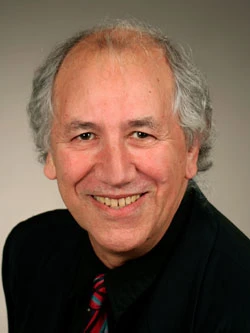
- 👤 Speaker: Professor Geoffrey Ozin, University of Toronto 🔗 Website
- 📅 Date & Time: Wednesday 11 November 2015, 15:30 - 16:30
- 📍 Venue: Wolfson Lecture Theatre, Department of Chemistry
Abstract
The Intergovernmental Panel on Climate Change (IPCC) reported in October 2013 that it is 95% certain humans are the cause of anthropogenic climate change from the increasing concentrations of carbon dioxide greenhouse gas emitted into the atmosphere from the combustion of fossil fuels. In March 2014 the IPCC announced that our planet now faces irreversible climate change and our only choice going forward is an assessment of risk, vulnerability, mitigation, adaptation and cost (http://www.ipcc.ch/). Let’s refer to this ‘burn-and-adapt’ scenario as Plan A. It appears to me that what is missing from the ongoing greenhouse gas climate-change debate is a credible Plan B, namely an alternative course of action for use if Plan A should fail. What I mean by Plan B is a ‘science-based technological solution’ with an accompanying action road-map to enable a global scale energy transition from our current one – which is dependent on the finite supply of oil, coal and gas – to one founded on a new energy source that would be able to sustain a global society; particularly after the emission of an estimated Trillion tons of CO2 into the atmosphere through the burning of fossil fuels (http://trillionthtonne.org/, http://www.climatecommuniques.com/,http://www.carbontracker.org/).
In this lecture I will explain that the answer to this billion dollar question is to be found at the scale of billionths of a meter in the emerging field of solar energy nanomaterials that I believe will power a new CO2 global economy, producing fuels and chemicals, a stable climate, a clean environment, and a sustainable and safe renewable energy future for society. The vision of a new CO2 economy that I will describe in this lecture presents a credible science and engineering paradigm, with a calculable cost, assessable risk and definable benefit over a quantifiable development time period. By contrast, the protracted climate change debate with its opposing forces appears to be grid-locked, increasing the economic and human cost of not having a credible Plan B.
Series This talk is part of the Chemistry Departmental-wide lectures series.
Included in Lists
- All Talks (aka the CURE list)
- Chemistry Departmental-wide lectures
- Department of Chemistry
- Equality, Diversity and Inclusion
- Featured lists
- Lennard-Jones Centre external
- School of Physical Sciences
- Wolfson Lecture Theatre, Department of Chemistry
Note: Ex-directory lists are not shown.