![[Search]](/static/images/search.gif)
![[A-Z Index]](/static/images/az.gif)
![[Contact]](/static/images/contact.gif)
![[University of Cambridge]](/static/images/identifier2.gif)
![[Talks.cam]](/static/images/talkslogosmall.gif)


 Tuesday 19 January 2016, 18:00-19:30

Improvisation as a way of knowing
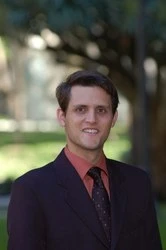
- 👤 Speaker: Dr Andrew Goldman, Columbia University 🔗 Website
- 📅 Date & Time: Tuesday 19 January 2016, 18:00 - 19:30
- 📍 Venue: Lecture Room 1, Faculty of Music, 11 West Road, CB3 9DP
Abstract
The lack of a single widely accepted definition of improvisation has not hindered the development of the field of improvisation studies, and in fact a critical literature is flourishing by questioning its historical, sociological, philosophical, and musicological foundations. However, in order to do scientific experiments on improvisation, an interim concrete definition must be chosen. Psychological and neuroscientific experimental work has defined the phenomenon in the problematic and culturally contingent terms of novelty and spontaneity, asking how the mind and brain facilitate such behavior.
In that improvisation is described in terms of cognitive and neurological characteristics that are not necessarily specific to music performance, these studies take an important step in providing a model that is potentially translatable between multiple styles and forms of improvisation. However, I argue that without being more critically sensitive to what it means for a performance to be “novel” or “spontaneous,” the scientific theories that are built upon these concepts remain equally ambiguous and problematic.
I propose a different conceptual foundational for scientific study that can ultimately contribute to the broader critical discourse as well. Improvisation can be considered as a way of knowing. Cognitive-scientific research has demonstrated that musical training changes how people perceive and perform music. Given that different groups of musicians train through different pedagogies and practice methods, it is reasonable to theorize that cognitive differences between groups of musicians can be similarly described. Specifically, improvisers emphasize truly hearing and anticipating what they are playing, not just in expressive characteristics of performance, but harmonically, melodically, and rhythmically as well. Experimental paradigms developed for theories of perception-action coupling could be used to investigate whether groups of musicians differ in this regard, and whether those characteristics correspond to and facilitate the skills and performance types normally identified as “improvisatory.”
These scientific theories and experiments are not based on the problematic terms of novelty and spontaneity, and can inform critical work on improvisation. For instance, the ability to efficiently interact with fellow members of an ensemble may rely on similar mechanisms to be identified in the experiments I propose.
Series This talk is part of the The Centre for Music and Science (CMS) series.
Included in Lists
- Cambridge Forum of Science and Humanities
- Cambridge Language Sciences
- Cambridge talks
- Chris Davis' list
- Guy Emerson's list
- Lecture Room 1, Faculty of Music, 11 West Road, CB3 9DP
- The Centre for Music and Science (CMS)
Note: Ex-directory lists are not shown.