![[Search]](/static/images/search.gif)
![[A-Z Index]](/static/images/az.gif)
![[Contact]](/static/images/contact.gif)
![[University of Cambridge]](/static/images/identifier2.gif)
![[Talks.cam]](/static/images/talkslogosmall.gif)


 Friday 08 July 2016, 16:00-17:00

Decision making in hierarchical multi-label classification (HMC) problems
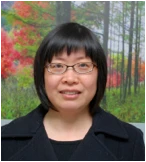
- 👤 Speaker: Haiyan Huang (UC Berkeley) 🔗 Website
- 📅 Date & Time: Friday 08 July 2016, 16:00 - 17:00
- 📍 Venue: CRUK CI Room 009/009A
Abstract
Multi-label classification assigns an object to multiple classes. Very often the classes can be organized in the form of a tree or directed acyclic graph (DAG), and the class assignments are required to respect the hierarchy: an object can be assigned to a class only if it has been assigned to the class’s parent in the hierarchy.
Multi- label classification with this hierarchical constraint is known as hierarchical multi-label classification (HMC). HMC has been increasingly common in modern applications such as disease diagnosis (i.e., disease ontology takes disease concepts organized into a DAG ).
In this talk, we will mainly discuss how to make “optimal” decisions in HMC given classifiers of individual classes. In particular, we introduce a new procedure, based on transforming the individual classifier scores into local precision rates or local false discovery rates, to make class assignments along either a tree- or DAG -structured hierarchy. This method will lead to an optimal hit curve under some reasonable conditions. This work was motivated from a project on computational disease diagnosis we did a few year ago.
This is a joint work with Christine Ho (a Stat PhD student at UCB ), Wayne Lee (Quantitative researcher at The Climate Corporation) and Dr. Ci-ren Jiang (Researcher fellow at Academia Sinica, Taiwan).
Prof. Haiyan Huang Bio
Haiyan Huang is currently an Associate Professor in the Department of Statistics at UC Berkeley. Meanwhile, she is affiliated with the graduate group in Biostatistics and the center for Computational Biology on campus. Prior to joining the faculty member of UC Berkeley, Haiyan Huang did a postdoc in Applied Statistics and Computational Biology at Harvard University. She obtained her Ph.D. in Applied Mathematics from the University of Southern California and received a B.S. in Mathematics from Peking University, China. As an applied statistician, her research is at the interface between statistics and data-rich scientific disciplines such as biology. Over the past few decades, rapidly evolving biological technologies have generated enormous high-dimensional, complex, noisy data, presenting increasingly pressing challenges to statistical and computational science. Her group has devoted to addressing various modeling and analysis challenges from these data.
Series This talk is part of the Seminars on Quantitative Biology @ CRUK Cambridge Institute series.
Included in Lists
- All CMS Events
- All Talks (aka the CURE list)
- Biology
- bld31
- Cambridge Centre for Data-Driven Discovery (C2D3)
- CamBridgeSens
- Cambridge talks
- CCC talks for website
- Chris Davis' list
- Computational and Systems Biology
- CRUK CI Room 009/009A
- CRUK CI Seminars
- custom
- Graduate-Seminars
- Interested Talks
- Liam
- Life Science Interface Seminars
- Life Sciences
- Life Sciences
- ME Seminar
- my_list
- ndk22's list
- ob366-ai4er
- other talks
- PMRFPS's
- rp587
- School of Physical Sciences
- se393's list
- Seminars on Quantitative Biology @ CRUK Cambridge Institute
- sfm36
- Trust & Technology Initiative - interesting events
- yk449
Note: Ex-directory lists are not shown.