![[Search]](/static/images/search.gif)
![[A-Z Index]](/static/images/az.gif)
![[Contact]](/static/images/contact.gif)
![[University of Cambridge]](/static/images/identifier2.gif)
![[Talks.cam]](/static/images/talkslogosmall.gif)

 Dr Owen Cooper, Earth System Research Laboratory, NOAA
 Friday 02 September 2016, 11:00-12:15

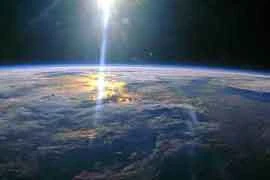
The Tropospheric Ozone Assessment Report: A community-wide effort to quantify tropospheric ozone in a rapidly changing world
- 👤 Speaker: Dr Owen Cooper, Earth System Research Laboratory, NOAA 🔗 Website
- 📅 Date & Time: Friday 02 September 2016, 11:00 - 12:15
- 📍 Venue: Unilever Lecture Theatre, Department of Chemistry
Abstract
Tropospheric ozone is a greenhouse gas and pollutant detrimental to human health and crop and ecosystem productivity. Since 1990 a large portion of the anthropogenic emissions that react in the atmosphere to produce ozone has shifted from North America and Europe to Asia. This rapid shift, coupled with limited ozone monitoring in developing nations, has left scientists unable to answer the most basic questions: Which regions of the world have the greatest human and plant exposure to ozone pollution? Is ozone continuing to decline in nations with strong emissions controls? To what extent is ozone increasing in the developing world? How can the atmospheric sciences community facilitate access to the ozone metrics necessary for quantifying ozone’s impact on human health and crop/ecosystem productivity?
To answer these questions the International Global Atmospheric Chemistry Project recently initiated the Tropospheric Ozone Assessment Report (TOAR). With over 220 members from 36 nations, TOAR ’s mission is to provide the research community with an up-to-date scientific assessment of tropospheric ozone’s global distribution and trends from the surface to the tropopause. TOAR has also built the world’s largest database of surface ozone observations and is generating ozone exposure and dose metrics at thousands of measurement sites around the world, freely accessible for research on the global-scale impact of ozone on climate, human health and crop/ecosystem productivity.
This talk will present the latest findings from TOAR revealing the regions of the world with extreme and worsening levels of surface ozone pollution. From a broader perspective, recent satellite data show a significant increase in the tropospheric ozone burden which will be assessed in light of current emissions inventories, satellite detected tropospheric NO2 and model analyses of the equatorward shift of ozone precursor emissions. Finally, the recent evolution of global ozone trends will be compared to the ACCMIP 2030 projections to gauge the expectation that the global tropospheric ozone burden will increase under business as usual emissions increases.
Series This talk is part of the Centre for Atmospheric Science seminars, Chemistry Dept. series.
Included in Lists
- All Talks (aka the CURE list)
- Cambridge Environment
- CamBridgeSens
- Cambridge talks
- Centre for Atmospheric Science seminars, Chemistry Dept.
- Climate Science Seminars within Cambridge
- Department of Chemistry
- Featured lists
- LCLU Departmental Talks
- Life Science Interface Seminars
- Queens' College Politics Society
- School of Physical Sciences
- Talks related to atmosphere and ocean dynamics and climate science
- Trust & Technology Initiative - interesting events
- Unilever Lecture Theatre, Department of Chemistry
- yk449
Note: Ex-directory lists are not shown.