![[Search]](/static/images/search.gif)
![[A-Z Index]](/static/images/az.gif)
![[Contact]](/static/images/contact.gif)
![[University of Cambridge]](/static/images/identifier2.gif)
![[Talks.cam]](/static/images/talkslogosmall.gif)


 Friday 28 October 2016, 15:00-16:00

Adaptive Structures: Infinitely Stiff, Extremely Slender, Ultra-Light Weight
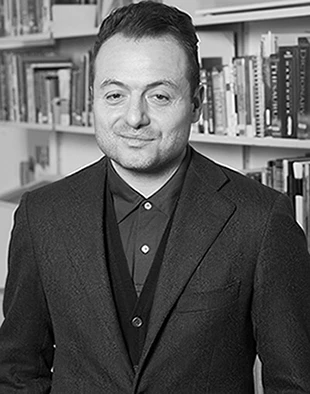
- 👤 Speaker: Dr Gennaro Senatore - University College London
- 📅 Date & Time: Friday 28 October 2016, 15:00 - 16:00
- 📍 Venue: Cambridge University Engineering Department, LR6
Abstract
Designing structures with minimal environmental impact is now a serious concern in the construction sector. Active control has been used in civil engineering structures for a variety of purposes. The most widespread application so far has been in vibration control. The potential of using adaptation to save material mass has been investigated by some but whether the energy saved by using less material makes up the energy consumed through control and actuation is a question that has so far received little attention.
During this seminar Dr Gennaro Senatore of University College London will present the formulation of a novel methodology to design adaptive structures. This design method seeks to synthesise structural configurations that are optimum hybrids between a passive and a fully active structure in order to minimise the sum of the embodied and operational energy of the structure. Instead of using more material to cope with the effect of loads, here strategically located active elements redirect the load path to homogenise the stresses and keep deflections within limits by changing the shape of the structure. To ensure the embodied energy saved this way is not used up to by actuation, the adaptive solution is designed to cope with ordinary loading events using only passive load bearing capacity whilst relying on active control to deal with larger events that have smaller probability of occurrence. A nested optimisation scheme finds the active-passive system that corresponds to the minimum of the sum of embodied and operational energy.
Using this method, a large scale prototype structure was designed and built in collaboration with Expedition Engineering at the UCL Structures Laboratory. The prototype is an ultra-slender 6m (length) x 0.8m (width) x 0.16m (depth) (37.5:1 span to depth) cantilevered truss structure controlled in real-time to maintain serviceability conditions under loading. The structure is 80% lighter than an equivalent passive one, the data gathered from the experiments in terms of energy savings confirm the numerical findings obtained with the numerical simulations. During the seminar key features of this prototype, including control architecture, will be discussed in some details. This prototype has been shortlisted for an IStructE Structural Award 2016 and it was exhibited in a few key locations including the IASS 2015 in Amsterdam and a month solo exhibition at the London Building Centre.
The research to date has successfully demonstrated that up to 70% reduction in structural weight and 50% of the whole-life energy (embodied and operational) was achievable on truss like structures. Several case studies will be presented ranging range from planar portal frames and catenary arch bridges to space trusses including doubly curved grid-shells and exoskeleton structures.
More info: gsenato.re/adaptiveStructuresUCL gsenato.re/adaptiveStructuresExhibition gsenato.re/adaptiveStructuresNCE gsenato.re/istructeAward

Series This talk is part of the Engineering Department Structures Research Seminars series.
Included in Lists
- All Talks (aka the CURE list)
- bld31
- Cambridge talks
- Cambridge University Engineering Department, LR6
- Cambridge University Engineering Department Talks
- Centre for Smart Infrastructure & Construction
- Civil Engineering Talks
- Computational Continuum Mechanics Group Seminars
- Engineering Department Structures Research Seminars
- Featured lists
- Interested Talks
- School of Technology
- Trust & Technology Initiative - interesting events
- yk449
Note: Ex-directory lists are not shown.