![[Search]](/static/images/search.gif)
![[A-Z Index]](/static/images/az.gif)
![[Contact]](/static/images/contact.gif)
![[University of Cambridge]](/static/images/identifier2.gif)
![[Talks.cam]](/static/images/talkslogosmall.gif)

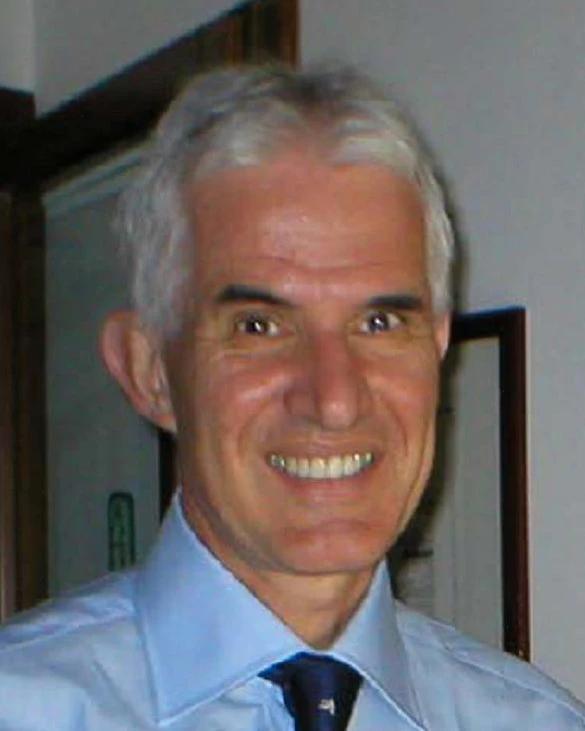
 Prof. Francesco Di Virgilio; Professor of Clinical Pathology, University of Ferrara, Italy
 Wednesday 25 April 2018, 14:00-15:00

Babraham Lecture - Understanding how the p53 onco-suppressor gene works: hints from the P2X7 ATP receptor
- 👤 Speaker: Prof. Francesco Di Virgilio; Professor of Clinical Pathology, University of Ferrara, Italy
- 📅 Date & Time: Wednesday 25 April 2018, 14:00 - 15:00
- 📍 Venue: Babraham - The Cambridge Building; Petersfield Lecture Theatre
Abstract
The tumour suppressor p53 has a key role against malignant transformation, mainly by inducing cell-cycle arrest and apoptosis. Over 50% of human cancers harbor somatic p53 gene mutations, and, in addition to sporadic tumors, inherited heterozygous loss-of-function mutations cause Li–Fraumeni syndrome, which confers a high familial risk to various types of cancer (Giorgi et al. 2015). Mice lacking p53 (p53 -/-mice) have been shown to have enhanced susceptibility to spontaneous tumors of various types and a shorter lifespan.
The P2X7 receptor (P2X7R) is an ATP -gated plasma membrane ion channel expressed to a very high level by several human and mouse malignant tumors. Basal activation of the P2X7R has a trophic effect on energy metabolism as it enhances both mitochondrial oxidative phosphorylation and aerobic glyclolysis, thus leading to increased ATP synthesis (Di Virgilio and Adinolfi 2017)..
P2X7R trophic effects are mediated by increases in the cytoplasmic Ca2+ concentration and activation of several key transcription factors (e.g. NFA Tc1, NFkB, HIF -1a) (Adinolfi et al. 2009), but in addition recent evidence show that the P2X7R itself localizes to the mitochondria. Thus, overall, the P2X7R in cancer cells has a strong growth-promoting effect. Accordingly, in vivo administration of pharmacological P2X7R blockers inhibits tumor growth in several experimental cancer models (Adinolfi et al. 2012).
We have recently observed that cells isolated from mice lacking p53 (p53-/- mice) display both enhanced P2X7R expression and activity (Giorgi C. et al., in preparation). Extension of these observations to human samples, showed an inverse correlation between p53 and P2X7R expression.
We then crossed p53-/ with P2X7R / mice to generate double p53//P2X7R/ mice. Genetic deletion of the P2X7R in the p53/ mice delayed cancer appearance and almost doubled the life span. The same effect was observed by administering pharmacological P2X7R blockers to the p53/- mice. Moreover, P2X7R genetic or pharmacological deletion re-establishes sensitivity to cytotoxicity triggered by chemotherapy drugs.
Altogether, these data suggest that the P2X7R has an oncogene-like behavior, and that it plays a major role in the mechanism of action of p53.
References
Adinolfi E, Callegari MG, Cirillo M, Pinton P, Giorgi C, Cavagna D, Rizzuto R and Di Virgilio F. (2009). J Biol Chem, 284, 10120-10128. Adinolfi E, Raffaghello L, Giuliani AL, Cavazzini L, Capece M, Chiozzi P, Bianchi G, Kroemer G, Pistoia V and Di Virgilio, F. (2012). Cancer Res, 72, 2957-2969. Di Virgilio, F and Adinolfi E. (2017). Oncogene, 36, 293-303. Giorgi C, Bonora M, Sorrentino G, Missiroli S, Poletti F, Suski JM, Galindo RF, Rizzuto R, Di Virgilio F, Zito E, Pandolfi PP, Wieckowski MR, Mammano F, Del SG and Pinton P. (2015). Proc Natl Acad Sci U S A , 112, 1779-1784.
Series This talk is part of the Babraham Seminar series.
Included in Lists
- Babraham Seminar
- Babraham - The Cambridge Building; Petersfield Lecture Theatre
- Graduate-Seminars
- se393's list
Note: Ex-directory lists are not shown.