![[Search]](/static/images/search.gif)
![[A-Z Index]](/static/images/az.gif)
![[Contact]](/static/images/contact.gif)
![[University of Cambridge]](/static/images/identifier2.gif)
![[Talks.cam]](/static/images/talkslogosmall.gif)

 Dr Javier Sotillo-Gallego (Instituto Carlos III, Madrid)
 Wednesday 23 October 2019, 16:00-17:00

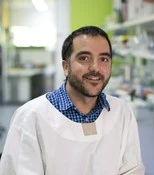
Role of extracellular vesicles in helminth-host interactions: From immunomodulation to vaccine development
- 👤 Speaker: Dr Javier Sotillo-Gallego (Instituto Carlos III, Madrid) 🔗 Website
- 📅 Date & Time: Wednesday 23 October 2019, 16:00 - 17:00
- 📍 Venue: Lecture Theatre 2, Department of Veterinary Medicine
Abstract
Helminths secrete a variety of molecules implicated in host-parasite interactions, either as soluble molecules or packed within extracellular vesicles (EVs). These EVs can be categorised in exosomes, microvesicles or apoptotic bodies depending on their size and origin, and can harbour many different proteins, lipids, glycans and genetic material such as miRNAs and mRNAs. Helminth-derived EVs, particularly exosome-like vesicles, have been shown to interact with the host in many different ways. They can be internalised by a variety of cells including immune cells such as macrophages and dendritic cells, as well as by intestinal cells, and liver cells; and can promote or inhibit the secretion of different cytokines. EVs secreted by some nematodes and trematodes have a potent immunomodulatory effect, and can ameliorate the symptoms of chemically-induced colitis in mice. Furthermore, EVs from different helminths contain vaccine candidates, showing the potential of EVs to be used as a source to develop new control strategies against helminth infections.
Series This talk is part of the Departmental Seminar Programme, Department of Veterinary Medicine series.
Included in Lists
- All Talks (aka the CURE list)
- Cambridge Immunology
- Cambridge Infectious Disease
- Cambridge Infectious Diseases
- Departmental Seminar Programme, Department of Veterinary Medicine
- Lecture Theatre 2, Department of Veterinary Medicine
- Vet School Seminars
Note: Ex-directory lists are not shown.