![[Search]](/static/images/search.gif)
![[A-Z Index]](/static/images/az.gif)
![[Contact]](/static/images/contact.gif)
![[University of Cambridge]](/static/images/identifier2.gif)
![[Talks.cam]](/static/images/talkslogosmall.gif)


 Tuesday 15 February 2022, 16:00-17:00

Dissecting the neural circuits underlying prefrontal regulation of reward and threat responsivity in a primate
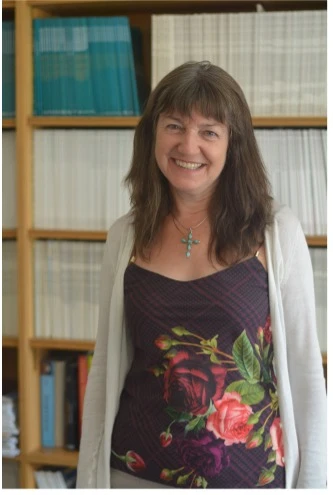
- 👤 Speaker: Professor Angela Roberts, Physiology, Development & Neuroscience 🔗 Website
- 📅 Date & Time: Tuesday 15 February 2022, 16:00 - 17:00
- 📍 Venue: Register on Zoom - link in abstract
Abstract
Theme: Neurons, Networks and Circuits
Tile: Dissecting the neural circuits underlying prefrontal regulation of reward and threat responsivity in a primate
Abstract: Gaining insight into the overlapping neural circuits that regulate positive and negative emotion is an important step towards understanding the heterogeneity in the aetiology of anxiety and depression and developing new treatment targets. Determining the core contributions of the functionally heterogenous prefrontal cortex to these circuits is especially illuminating given its marked dysregulation in affective disorders. This presentation will review a series of studies in a new world monkey, the common marmoset, employing pathway-specific chemogenetics, neuroimaging, neuropharmacology and behavioural and cardiovascular analysis to dissect out prefrontal involvement in the regulation of both positive and negative emotion. Highlights will include the profound shift of sensitivity away from reward and towards threat induced by localised activations within distinct regions of vmPFC, namely areas 25 and 14 as well as the opposing contributions of this region, compared to orbitofrontal and dorsolateral prefrontal cortex, in the overall responsivity to threat. Ongoing follow-up studies are identifying the distinct downstream pathways that mediate some of these effects as well as their differential sensitivity to rapidly acting anti-depressants.
Biography: Angela Roberts obtained her PhD in neuroendocrinology from University of Cambridge (1985) and following postdoctoral studies researching into the neural and neurochemical basis of cognitive flexibility was appointed Lecturer in Department of Anatomy, Cambridge, in 1996, becoming Professor of Behavioural Neuroscience in 2010. She was elected a Fellow of the Academy of Medical Sciences in 2016. Recent scientific contributions have involved establishing non-human primate models of positive and negative emotion regulation, fractionating out the distinct prefrontal networks that may underlie the varied aetiology of affective disorders and elucidating the sensitivity of these networks to anxiolytics/antidepressants essential for the more effective targeting of current pharmacotherapies. She received the Goldman-Rakic Prize for outstanding achievements in Cognitive Neuroscience in 2020
Register in advance for this meeting: https://us02web.zoom.us/meeting/register/tZwvf-mvrjwrGdcaKPl0cH7zhJvmjX-kF5fc
After registering, you will receive a confirmation email containing information about joining the meeting.
Series This talk is part of the Cambridge Neuroscience Interdisciplinary Seminars series.
Included in Lists
- Biology
- Cambridge Neuroscience Interdisciplinary Seminars
- Cambridge Neuroscience Seminars
- Cambridge talks
- Chris Davis' list
- dh539
- dh539
- Featured lists
- Guy Emerson's list
- Life Science
- Life Sciences
- Neuroscience
- Neuroscience Seminars
- Neuroscience Seminars
- Register on Zoom - link in abstract
- se393's list
- Stem Cells & Regenerative Medicine
Note: Ex-directory lists are not shown.