![[Search]](/static/images/search.gif)
![[A-Z Index]](/static/images/az.gif)
![[Contact]](/static/images/contact.gif)
![[University of Cambridge]](/static/images/identifier2.gif)
![[Talks.cam]](/static/images/talkslogosmall.gif)


 Tuesday 16 November 2021, 19:30-20:45

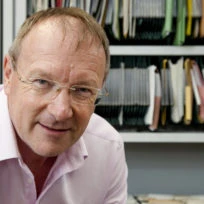
Severe Space Weather
- 👤 Speaker: Professor Richard Horne FRS, British Antarctic Survey 🔗 Website
- 📅 Date & Time: Tuesday 16 November 2021, 19:30 - 20:45
- 📍 Venue: Pfizer Lecture Theatre, Department of Chemistry
Abstract
Large explosions on the Sun can expel billions of tons of charged particles and magnetic field out into space in what is known as a coronal mass ejection. When this plasma encounter’s the Earth’s magnetic field it can tear open the outer layers and cause a geomagnetic storm which can last for days. The Sun can also emit intense radiation from solar flares and drive radiation storms where high energy particles penetrate the Earth’s magnetic field, particularly in the Polar Regions. In this talk we first describe some of the historical origins of space weather including the Carrington storm of 1859. We describe how space weather can affect the power grid causing disruption to power supplies, pose a radiation risk to aviation, damage satellites, interrupt communications and GPS signals, delay rocket launches and increase the risk of collisions between satellites and space debris in low Earth orbit. We discuss some of the uncertainty over the economic impact and what mitigation measures can be taken. Finally, we discuss some of the challenges around forecasting space weather now and into the future and a new prototype forecasting system developed at the British Antarctic Survey.
Series This talk is part of the Cambridge University Astronomical Society (CUAS) series.
Included in Lists
- Cambridge University Astronomical Society (CUAS)
- Cambridge University Astronomical Society (CUAS)
- Chris Davis' list
- Cosmology, Astrophysics and General Relativity
- Guy Emerson's list
- Pfizer Lecture Theatre, Department of Chemistry
Note: Ex-directory lists are not shown.