![[Search]](/static/images/search.gif)
![[A-Z Index]](/static/images/az.gif)
![[Contact]](/static/images/contact.gif)
![[University of Cambridge]](/static/images/identifier2.gif)
![[Talks.cam]](/static/images/talkslogosmall.gif)

 Professor Naama Barkai; Dept. of Molecular Genetics, Weizmann Institute of Science
  Thursday 27 January 2022, 12:30-13:30

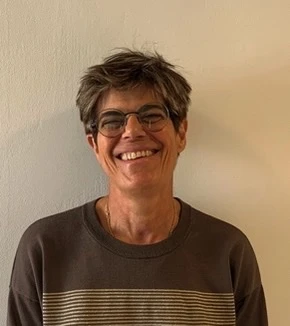
Regulatory evolution by transcription-factor duplication
- 👤 Speaker: Professor Naama Barkai; Dept. of Molecular Genetics, Weizmann Institute of Science
- 📅 Date & Time: Thursday 27 January 2022, 12:30 - 13:30
- 📍 Venue: Online via zoom
Abstract
Throughout evolution, new transcription factors (TFs) emerge by gene duplication, promoting growth and rewiring of transcriptional networks. How TF duplicates diverge was studied in a few cases only. To provide a genome-scale view, we considered the set of budding yeast TFs classified as whole-genome duplication (WGD)-retained paralogs (35% of all specific TFs). Using high-resolution profiling, we find that 60% of paralogs evolved differential binding preferences. We show that this divergence results primarily from variations outside the DNA binding domains (DBDs), while DBD preferences remain largely conserved. Analysis of non-WGD orthologs revealed uneven splitting of ancestral preferences between duplicates, and the preferential acquiring of new targets by the least conserved paralog (biased sub/neo-functionalization). Interactions between paralogs were rare, and, when present, occurred through weak competition for DNA -binding or dependency between dimer-forming paralogs We discuss the implications of our findings for the evolutionary design of transcriptional networks.
Click here to join live – https://us06web.zoom.us/j/83688166215
Series This talk is part of the Babraham Seminar series.
Included in Lists
Note: Ex-directory lists are not shown.