![[Search]](/static/images/search.gif)
![[A-Z Index]](/static/images/az.gif)
![[Contact]](/static/images/contact.gif)
![[University of Cambridge]](/static/images/identifier2.gif)
![[Talks.cam]](/static/images/talkslogosmall.gif)


 Tuesday 08 February 2022, 19:30-20:45

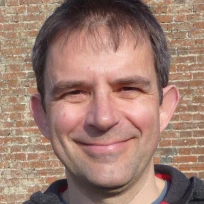
Celestial Incantations
- 👤 Speaker: Dr. Nigel Meredith, British Antarctic Survey 🔗 Website
- 📅 Date & Time: Tuesday 08 February 2022, 19:30 - 20:45
- 📍 Venue: Delivered online via Zoom
Abstract
Talk Abstract
Our planet naturally produces a variety of radio emissions, generated by lightning activity and geomagnetic storms driven by the Sun. These natural radio waves are at the lower end of the radio spectrum in the audio-frequency range, so-called because they have the same frequencies as audible sound waves. We use a Very Low Frequency Receiver, located at Halley Research Station in Antarctica, to record these emissions. Halley is a great location to detect these waves because it is magnetically connected to the outer radiation belt where some of the signals are generated and is electromagnetically “quiet”, being far from man-made sources. At the British Antarctic Survey, we use this radio wave data primarily to investigate the science of space weather storms, to help us understand the impact of space weather on the Earth-Climate system, and for lightning detection. As a remarkable spin-off, conversion to sound reveals a series of weird and wonderful noises, known as the ‘sounds of space’. In this presentation, we will explore the amazing variety of natural ‘sounds’ detected at Halley, Antarctica and then embark on a sound-led, data-driven journey from Earth-orbit to beyond the galaxy! I will then describe how the “Sounds of Space Project”, our art-science collaboration, has woven these mysterious “sounds” into performances that fuse art and science, new music, and short films. I will introduce our first album, “Aurora Musicalis”, which features recordings from the Halley VLF Receiver accompanied by ambient music on a grand piano. My talk will culminate with a presentation of the tracks and track artwork from “Celestial Incantations”, our second album, which features the ‘sounds of space’ from astronomical objects both within and beyond our solar system together with a massive musical palette, including orchestral and traditional instruments and electronics.
Further Information
‘Sounds of Space’ project website, https://www.bas.ac.uk/project/sounds-of-space/
Meredith, N.P., Turning the ‘sounds of space’ into art, Astronomy and Geophysics, 60, 2, https://doi.org/10.1093/astrogeo/atz097, 2019
Aurora Musicalis, https://soundsofspaceproject.bandcamp.com/album/aurora-musicalis
Celestial Incantations, https://soundsofspaceproject.bandcamp.com/album/celestial-incantations
Meredith, N. P., K. Cunio, D. Scarborough, & A. D. Wynne, Music of the spheres, Astronomy and Geophysics, 63, 1, https://doi:10.1093/astrogeo/atac013, 2022
—-
Speaker Information
Dr Nigel Meredith is a space weather research scientist at British Antarctic Survey. He uses satellite data to develop global models of plasma waves in near Earth space for input into radiation belt codes and, ultimately, to forecast space weather. He is also interested in extreme space weather and has recently applied extreme value analysis to long-term satellite datasets to determine the 1 in 10, 1 in 50 and 1 in 100 year space weather events. This is important for assessing the impact of extreme events on the world’s satellite fleet. He enjoys exploring how to make scientific data more accessible and is currently involved in an art-science collaboration, ‘sounds of space’. He has published 128 papers in peer-reviewed journals covering a wide range of topics in space plasma physics.
Series This talk is part of the Cambridge University Astronomical Society (CUAS) series.
Included in Lists
- Cambridge University Astronomical Society (CUAS)
- Cambridge University Astronomical Society (CUAS)
- Chris Davis' list
- Cosmology, Astrophysics and General Relativity
- Delivered online via Zoom
- Guy Emerson's list
Note: Ex-directory lists are not shown.