![[Search]](/static/images/search.gif)
![[A-Z Index]](/static/images/az.gif)
![[Contact]](/static/images/contact.gif)
![[University of Cambridge]](/static/images/identifier2.gif)
![[Talks.cam]](/static/images/talkslogosmall.gif)

 Hannah Rowland (Department of Zoology, University of Cambridge)
 Wednesday 10 October 2012, 12:30-13:30

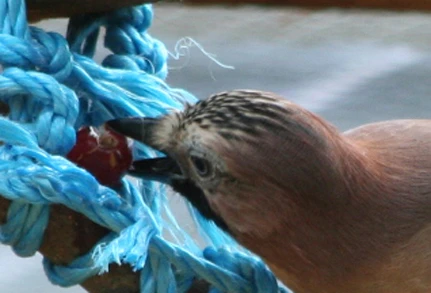
"Making Sense of Avian Taste"
- 👤 Speaker: Hannah Rowland (Department of Zoology, University of Cambridge)
- 📅 Date & Time: Wednesday 10 October 2012, 12:30 - 13:30
- 📍 Venue: Library, Sub-Department of Animal Behaviour, Madingley
Abstract
The taste (gustation) system of animals allows them to recognise a diverse repertoire of nutrients (sugars, amino acids, salts, fats) or toxic chemicals, and is intimately related to diet selection. The ability to perceive bitter-tasting substances is a particularly important trait, since it enables an animal to avoid ingesting potentially fatal toxins. Bitter taste perception is mediated by a family of taste receptor genes called Tas2r, which belong to a G protein-coupled receptor (GPCR) signalling pathway. Tas2r gene repertoires have been identified in the chicken, turkey, zebra finch, white throated sparrow, and a range of mammals, frogs, lizards and some teleost fishes. The diversity, evolution and function of Tas2r genes in humans and non-human primates are relatively well understood. In contrast, our understanding of Tas2r genes and the evolution and function of bitter taste perception in birds is more controversial. I will review the chemosensory mechanisms by which birds detect defensive chemicals; the evidence for perception, avoidance and tolerance of defensive chemicals by birds, and discuss how dietary and habitat differences might underlie variation in diet selection, food preferences, and the number of functional Tas2r genes in birds.
Series This talk is part of the Madingley Lunchtime Seminars series.
Included in Lists
Note: Ex-directory lists are not shown.