![[Search]](/static/images/search.gif)
![[A-Z Index]](/static/images/az.gif)
![[Contact]](/static/images/contact.gif)
![[University of Cambridge]](/static/images/identifier2.gif)
![[Talks.cam]](/static/images/talkslogosmall.gif)


 Tuesday 07 November 2017, 11:00-13:00

Simultaneous and coded seismic sources: Present and upcoming technologies
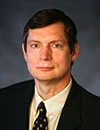
- 👤 Speaker: Raymond Abma - BP America 🔗 Website
- 📅 Date & Time: Tuesday 07 November 2017, 11:00 - 13:00
- 📍 Venue: Rayleigh seminar room, 2nd floor, Maxwell Building, Cavendish laboratory
Abstract
Simultaneous source seismic surveys, using a method referred to as source blending, use more than one seismic source at a time. This technology is part of the progression of seismic surveys to obtain denser sampling and better seismic images. Simultaneous sourcing uses multiple seismic sources, producing seismic signals that overlap with the signals from the other seismic sources. This increases the efficiency of seismic exploration by decreasing the time between shots, significantly reducing the cost and time needed to acquire a seismic survey. The main challenge to the use of simultaneous sources is the separation of signals from the different sources. This separation is accomplished by using concepts from compressive sensing by way of sparse inversion, a method of getting the simplest answer to the inversion of a matrix equation. While this involves a significant computational expense, the decrease in the acquisition cost is even more substantial. I will show examples of various BP simultaneous source seismic surveys and share some details about how they were acquired and processed. I will also cover some of the requirements for a successful simultaneous source survey and an analysis of the quality of the seismic data obtained. Present simultaneous source surveys use the random activation of the shot times as a code to allow shot separation. I will provide some speculation about extending this coding to other possible coding methods. Among some other advantages, these new types of coded sources allow the extension of simultaneous source survey geometries to more general seismic survey types, in particular, towed-streamer acquisition.
Series This talk is part of the Laboratory for Scientific Computing series.
Included in Lists
- All Cavendish Laboratory Seminars
- All Talks (aka the CURE list)
- bld31
- Cambridge Centre for Data-Driven Discovery (C2D3)
- Cambridge talks
- Centre for Health Leadership and Enterprise
- Chris Davis' list
- Featured lists
- Interested Talks
- Laboratory for Scientific Computing
- Lennard-Jones Centre external
- ME Seminar
- ndk22's list
- Neurons, Fake News, DNA and your iPhone: The Mathematics of Information
- ob366-ai4er
- Rayleigh seminar room, 2nd floor, Maxwell Building, Cavendish laboratory
- rp587
- School of Physical Sciences
- Thin Film Magnetic Talks
- Trust & Technology Initiative - interesting events
- yk449
Note: Ex-directory lists are not shown.